Car Driving & Parking Academy
Safari MMSRacing
4.61.00 Reviews
- Version
- 1.1.8
- Installs
- 1.00M
- Age Rating
- Everyone
Screenshots
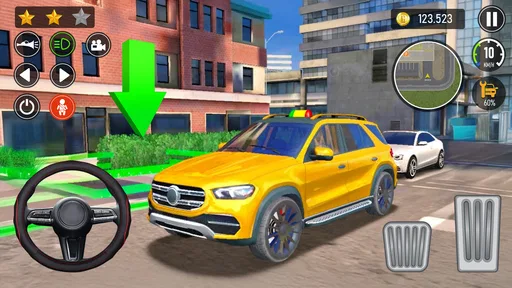
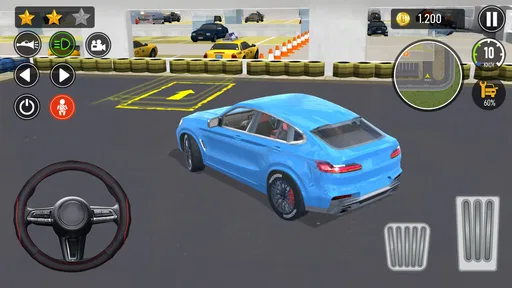
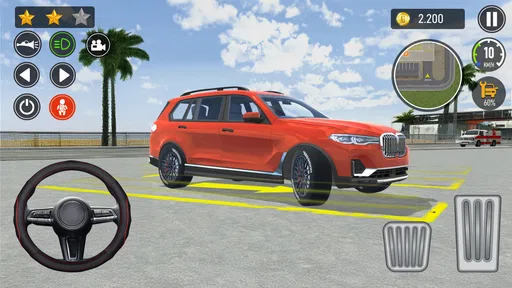
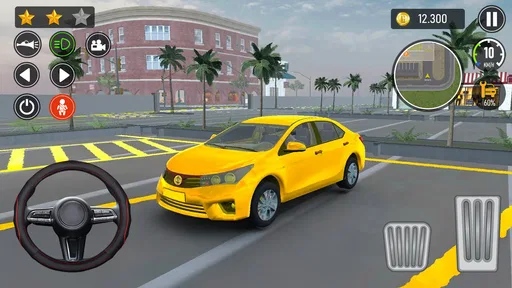
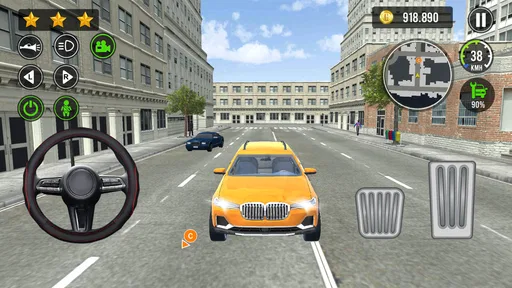
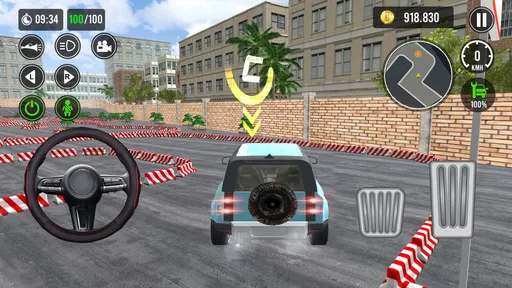
Our Review of Car Driving & Parking Academy
 Analysis by Appyee
I approached Car Driving & Parking Academy as a practice-focused racing game rather than a traditional speed contest. Its central appeal is learning to handle a car carefully, especially when parking and positioning matter more than simply reaching the finish line first. That makes it an interesting choice for players who enjoy controlled driving challenges and want something calmer than an arcade racer.
The game is free, carries an Everyone age rating, and comes from Safari MMS. It has built a sizeable audience, with over one million installs and a 4.6 average from around 700 ratings. Those figures suggest that the basic idea connects with many players, although they do not tell the whole story. In my experience, a parking game succeeds or fails on the quality of its controls, the fairness of its challenges, and whether progress feels meaningful after the novelty wears off.
How the current driving experience feels
The first thing I noticed is that this is not built around reckless acceleration. The academy theme points the player toward deliberate movement: lining up a vehicle, judging space, correcting a turn, and avoiding the small mistakes that can ruin a parking attempt. That focus gives the game a different rhythm from racing titles where the main goal is to overtake opponents.
I found the concept most enjoyable when I treated each attempt as a short driving exercise. Instead of rushing through a maneuver, I would approach slowly, check the angle, and make a small correction before committing to the space. That habit is useful because parking challenges punish impatience more than a conventional circuit race does. A quick input that might be harmless on an open road can send the car into an obstacle when there is little room to recover.
The game is therefore best understood as a car parking and driving simulator with racing-game accessibility. It is not the right pick if you want a deep motorsport career, competitive multiplayer, or a large open world to explore. It is better suited to short sessions in which the satisfaction comes from completing a precise maneuver cleanly.
Controls are more important than speed
For a game like this, the control scheme becomes the real test. I recommend beginning with gentle inputs rather than holding a direction for too long. Small steering adjustments make it easier to understand how the car reacts, while sudden corrections often create a second problem before the first one is solved.
A useful routine is to separate the maneuver into three stages: approach, alignment, and final placement. During the approach, I keep the vehicle slow enough to leave room for correction. During alignment, I focus on the angle of the car rather than the empty space alone. During final placement, I avoid unnecessary steering because a nearly successful attempt can be spoiled by trying to make one last dramatic adjustment.
This approach also helps answer a common question: is it suitable for beginners? Yes, especially for players who enjoy learning through repetition. It may feel less comfortable for someone expecting immediate, forgiving arcade handling. The academy framing works best when the player accepts that accuracy is the challenge, not a side effect of driving quickly.
A practical everyday use case
I can easily see myself playing this while waiting for an appointment or taking a short break from work. A parking task gives the session a clear beginning and end, so I do not need to commit to a long race or remember a complicated storyline. It also works well for someone who likes mobile games that can be played in small bursts without demanding constant attention for an extended period.
There is a particular benefit for players who become frustrated by racing games that depend on aggressive overtaking. Here, the pressure comes from spatial judgment. A player who prefers patience, observation, and gradual improvement may find more satisfaction in completing a difficult parking sequence than in finishing first against opponents.
On the other hand, I would skip it during moments when I want a fast adrenaline rush. The careful pace can feel restrained if your idea of racing is drifting around corners, using power-ups, or battling a crowded field. In that situation, a conventional arcade racer is likely to provide more immediate excitement.
What the version and release details tell us
The game is currently listed as version 1.1.8, and its release date is Jul 8, 2026. That places the present experience in an early stage of its public life rather than suggesting a long-established driving platform with years of visible expansion. I see the current build as a foundation: the core concept is clear, while future improvements will determine how much depth it can develop.
The version number matters because players often wonder whether an academy-style driving game is still being shaped or already feels finished. In this case, I would approach it as a compact experience that can be enjoyable now, while keeping expectations realistic about long-term variety. A version update can improve handling, presentation, or progression, but I would not assume that every future update will transform the game into a full-scale racing simulator.
The release information also gives existing users a useful reference point. If you played an earlier build, the current version is the one to judge rather than relying on first impressions from an older installation. For new players, it is worth checking that the device meets the minimum operating requirement of Android 7.0 or later before trying to install it. That requirement is modest, so compatibility should be broad among older Android phones, but the feel of the game can still vary depending on the device and its controls.
How the current build affects returning players
Returning users should pay attention to how familiar maneuvers feel after updating. In driving games, even a small adjustment to steering response or vehicle behavior can change the timing of a parking attempt. A technique that worked reliably before may need to be softened, especially when entering a narrow space or correcting the car near an obstacle.
My advice is to spend a few minutes recalibrating your habits instead of immediately attempting the hardest challenge you remember. Test a simple turn, approach a parking area at low speed, and observe whether the car responds as expected. This is not wasted time; it prevents an update-related change in handling from being mistaken for personal inconsistency.
New players can use the same process as a learning tool. Rather than measuring progress only by whether a task is completed, notice which part causes the failure. If the approach is too fast, slow down earlier. If the vehicle enters at the wrong angle, begin the turn sooner. If the final correction creates the collision, stop steering once the car is aligned. These observations turn repetition into practice instead of random retries.
Where it stands beside familiar alternatives
Compared with a typical arcade racing game, this title trades speed and spectacle for precision. Arcade racers usually reward bold movement and quick reactions, while parking challenges reward restraint. Compared with a full driving simulator, it is more approachable because the goal is narrower: complete a maneuver rather than manage an entire driving routine over a long session.
That middle ground is its strongest position. Someone who finds realistic simulators too demanding may appreciate the focused tasks, while someone who finds arcade racers too chaotic may enjoy the slower decision-making. The trade-off is that the game may feel limited to players who need a broad collection of race types, vehicle tuning, exploration, or competition to stay interested.
I would also choose this over a standard racing game when I want to improve my sense of vehicle placement on a small screen. The practice of watching angles and leaving space is more relevant here than memorizing a track. But if my priority were speed, lap times, or head-to-head competition, I would choose a different category of game rather than expecting this academy format to provide it.
Strengths, friction points, and useful habits
The clearest strength is the focused goal. Parking gives each challenge a practical shape, and the player can understand why an attempt succeeded or failed. That clarity is valuable on mobile, where a game benefits from communicating its purpose quickly. I never need to wonder what kind of behavior the game is asking for: careful driving is the point.
Another strength is the potential for gradual improvement. A player can develop a repeatable approach instead of relying entirely on luck. I found that slowing down before the turn, leaving a wider entry angle, and making fewer final corrections produced more consistent results. These are simple habits, but they make the difference between feeling stuck and feeling that each retry is teaching something.
The main friction is also connected to that precision. A mistake can feel disproportionate when the car is almost correctly positioned. Players who prefer forgiving controls may interpret a failed attempt as unfair, particularly if they are still learning how much steering input is required. The game demands patience, and that demand will not suit everyone.
There is also a trade-off between accessibility and depth. The academy idea is easy to understand, but a player who has completed many similar parking tasks may eventually want more variation. Without inventing features that are not established, I would say the long-term question is whether the existing concept can keep offering fresh decisions rather than repeating the same maneuver with only minor changes.
Three ways to get more from each session
Use the first attempt as a scouting run. Instead of trying to finish immediately, observe the available space, the direction of the approach, and where a correction might be needed. This reduces careless retries and gives you a plan for the next attempt.
Practice stopping before steering. Many players turn continuously because they are afraid of losing momentum. I get better results by allowing the car to settle, then making one measured input. That pause makes the vehicle’s position easier to judge.
Separate speed problems from angle problems. If the car reaches the right area but collides during the turn, changing the approach angle is more useful than simply driving slower. If the alignment is good but the car overshoots the space, reducing speed is the better adjustment.
These techniques are more useful than blindly repeating a challenge. They also make the game a better fit for players who enjoy mastering a process. The satisfaction comes from understanding the maneuver and reproducing it, not from discovering a hidden shortcut or relying on a lucky input.
Who should install it, and who should pass?
I recommend it to casual players who like cars but do not necessarily want a serious motorsport game. It is especially appealing if you enjoy compact challenges, careful positioning, and the feeling of improving through repeated attempts. The free price makes it easy to try without making the decision feel significant, and the Everyone rating makes it suitable for a broad audience.
It is also a reasonable choice for families looking for a driving-themed game with a straightforward premise. Younger players may need time to understand the controls, but the focus on parking is easier to explain than a complicated racing system. Older players who enjoy puzzle-like tasks may appreciate it for the same reason: each maneuver becomes a small spatial problem.
I would skip it if you want realistic traffic rules, a detailed vehicle collection, competitive online racing, or a story-driven campaign. I would also avoid it if repeated precision tasks make you impatient. The game cannot satisfy every type of racing fan, and choosing it for speed-based excitement would create the wrong expectations from the start.
What I would watch as the game develops
The most important area to watch is variety. A parking academy has a strong central idea, but its staying power depends on how often the player must solve a genuinely different positioning problem. New situations should encourage new approaches rather than asking for the same turn repeatedly.
I would also watch the handling model across future versions. Consistent controls are essential for a game built around accuracy. If the response changes, players need to be able to adapt without feeling that their previous practice has become irrelevant. Clear, predictable behavior matters more here than flashy additions.
Another point is how well the game serves both newcomers and experienced players. Beginners need room to learn without being overwhelmed, while returning users need reasons to keep refining their technique. A healthy balance would let a first-time player understand the basics and still give a practiced driver something meaningful to master.
For now, I see Car Driving & Parking Academy as a focused free racing game with a useful niche. It is not trying to replace every driving title on a phone, and I would not recommend it as though it did. Its value is narrower and more practical: it turns parking into the main challenge and rewards players who prefer control over chaos.
My final recommendation is simple. Try it if you want short, car-centered sessions where patience and positioning matter. Begin slowly, treat failed attempts as information, and give yourself time to learn the response of the vehicle. If you are searching for high-speed races or deep simulation systems, choose another option. For everyone else, this is a pleasant way to turn an ordinary parking maneuver into a compact test of judgment, with enough room for improvement to make another attempt worthwhile.
Verdict
Strengths of Car Driving & Parking Academy
- Realistic parking challenges help improve precision and spatial awareness.
- Progressive levels make it suitable for both beginners and experienced drivers.
- Multiple camera angles provide better control during tight maneuvers.
- Offline play is convenient when you have no internet connection.
- Simple controls make steering, braking, and reversing easy to learn.
Limitations of Car Driving & Parking Academy
- Some levels may feel repetitive after extended play sessions.
- Ads can interrupt gameplay, especially between completed challenges.
- Vehicle handling may feel less realistic than expected for a simulator.
- Limited customization reduces long-term appeal for some players.
- Certain stages require careful timing and can become frustrating quickly.
Other Releases by Safari MMS
View All
Traffic Moto Rider City
Racing4.5

Real Traffic Car Simulator 3D
Racing4.4
Similar Picks in This Category
View All
Hill Climb Racing
Fingersoft4.3

Dr. Driving
SUD Inc.4.2

Traffic Rider
skgames4.5

Asphalt 8 - Car Racing Game
Gameloft SE4.6

Race Master 3D: Car Racing
Beresnev Games4.6

Extreme Car Driving Simulator
AxesInMotion Racing4.3
Frequently Asked Questions
What is Car Driving & Parking Academy?
Car Driving & Parking Academy is a driving simulation game focused on learning and practicing vehicle control, road movement, and parking skills. After trying it, I found that it combines driving challenges with parking exercises, requiring careful steering, braking, acceleration, and positioning. It is designed more as a casual training-style game than a fully realistic driving simulator, making it approachable for beginners and enjoyable for short play sessions.
How do you play Car Driving & Parking Academy?
Gameplay generally involves completing driving and parking tasks while following the objectives shown on screen. You control the car using touch-based steering, acceleration, and braking controls, then maneuver through courses without hitting obstacles or crossing boundaries. The parking stages require patience and accurate alignment, while driving missions test your ability to control speed and direction. Completing challenges successfully allows you to progress through additional levels.
Is Car Driving & Parking Academy suitable for beginners?
Yes, the game is suitable for beginners who want to become familiar with basic driving and parking concepts in a simple virtual environment. The controls are relatively easy to understand, although some levels require practice because small steering mistakes can lead to collisions or failed attempts. It should not be considered a replacement for real driving lessons, but it can help players practice observation, positioning, and smooth vehicle control.
Does Car Driving & Parking Academy require an internet connection?
The game may allow some driving and parking activities to be played offline, but certain features can depend on an active internet connection. Online access may be required for advertisements, updates, analytics, or additional content, depending on the version installed on your Android or iOS device. Before downloading, it is worth checking the store listing and testing the game offline, especially if you plan to play while traveling.
Is Car Driving & Parking Academy free to download and play?
Car Driving & Parking Academy is generally available as a free download, allowing users to try its main driving and parking challenges without an upfront purchase. However, free versions commonly include advertisements and may offer optional in-app purchases, such as removing ads, unlocking content, or obtaining virtual items. Parents should review the purchase settings, while all players should check the current store description for the latest pricing details.
Play our best games!


